
How to Check for a Leelanau County Warrant
Because no official Leelanau County warrant database is posted online, the search runs through people, not a portal. The Leelanau County Sheriff's Office is the first stop for most questions. Its non-emergency dispatch line, 231-256-8800, can route a caller to the right desk. For someone already in custody, Jail Control at 231-256-8661 handles booking and hold questions. Anyone with information about a wanted person can use the confidential tip line at 231-256-8696 or email tips@leelanau.gov.
Court records hold the other half of the answer. A warrant tied to a traffic ticket or a misdemeanor usually comes from the 86th District Court, which serves Leelanau, Grand Traverse, and Antrim Counties. A felony warrant is signed in the 13th Circuit Court. When a case is public, the statewide MiCOURT Case Search and the district court's calendar links can show an open warrant status. Records that are not online may need a direct call to the clerk of the court that issued the order.
One channel of last resort remains. For sheriff or county records that are not posted, a written request to FOIA@leelanau.gov starts the public-records process, though active investigations can be withheld.
No Online Leelanau County Warrant List
Several tools look like they should show warrants but do not. The Michigan State Police ICHAT system runs name-based criminal-history searches, yet it leaves warrants out by design, along with juvenile, traffic, and out-of-state records. No official Leelanau County Sheriff mobile app with a warrant lookup was found on the county's own pages. And no public county web page publishes a live active-warrant list, so a name-only web search will not confirm whether a warrant is open.
That gap is deliberate in part. Sharing warrant details too widely can tip off a wanted person or expose a victim. So the county keeps verification in the hands of staff who can confirm identity and status. For a reliable answer, a direct request to the sheriff or the issuing court beats any site claiming to hold Leelanau County warrant data. The Michigan State Police criminal-history page spells out what ICHAT covers and what it does not.
Types of Warrants in Leelanau County
Not every warrant works the same way. Some follow a criminal charge. Others punish a missed court date. A judge or magistrate signs each one, and the type shapes how it is cleared.
- Arrest warrant - authorizes police to take a named person into custody after a complaint or warrant request is approved.
- Bench warrant - issued from the bench for a missed hearing, a probation problem, contempt, or failure to pay or comply with a court order.
- Search warrant - allows a search of a place or thing, and it often stays sealed until it is executed and returned.
- Probation warrant - issued when a person is accused of violating the terms of probation.
- Traffic or civil-infraction warrant - can follow a failure to appear or pay, and may bring driver-license consequences through the state.
- Fugitive or extradition hold - stems from an out-of-county or out-of-state warrant and can hold a person without full public detail.
Note: The court that signs a warrant decides how it is cleared, so identifying the issuing court is the first practical step in any Leelanau County warrant question.
What a Leelanau County Warrant Record Shows
A warrant record holds more than a name. When part of it is public, it identifies the order, the case behind it, and the court that signed it. The fields below appear on court dockets and in sheriff records when they are releasable.
| Field | What It Shows |
|---|---|
| Name or alias | The wanted person's legal name and any known aliases. |
| Warrant number | The unique number the court assigns to the order. |
| Case number | Links the warrant to its underlying court case. |
| Issuing court | Whether the 86th District, 13th Circuit, or Probate Court signed it. |
| Charge or offense | The alleged violation, often with the MCL statute or local ordinance. |
| Bond amount | The money or conditions set for release, when one is listed. |
| Issue date | The day the court authorized the warrant. |
| Entering agency | The law-enforcement agency that entered the warrant into the system. |
| Court date | Any required appearance tied to the order. |
| Hold or extradition note | Flags an out-of-area hold when that detail is public. |
Some fields never reach public view. A full date of birth, a Social Security number, and other protected identifiers are redacted under Michigan court rules. A warrant's cancellation, once the order is served or recalled, may also appear in the case docket where that record is public.
How to Resolve an Outstanding Leelanau County Warrant
Ignoring a warrant rarely helps. It can lead to an arrest at a traffic stop, at work, or at home, often at the worst moment. Handling it on purpose gives a person more control over timing, bond, and counsel.
- Skip ICHAT for this. The state police confirm that warrants do not appear in ICHAT, so a clean ICHAT result does not mean a person is clear.
- Figure out which court likely issued it. Traffic, misdemeanor, and preliminary felony matters point to the 86th District Court. Felony and family cases point to the 13th Circuit Court. Probate contempt or mental-health matters point to Probate Court.
- Call the court clerk or the sheriff's non-emergency line to confirm the public details. For a person in custody, call Jail Control.
- Ask about bond, whether a walk-in arraignment or magistrate appearance is possible, and whether counsel should appear first.
- If the warrant ties to a payable traffic or civil-infraction case, check whether online payment is still open. Some older criminal cases have limited web payment during set-aside reconciliation.
- After the matter is resolved, ask when the cancellation will update in the state LEIN system and public court records, then keep every receipt and order.
Important: Talking with a defense lawyer before surrendering can protect a person's rights, clarify bond, and shape how the first court appearance goes.
Leelanau County Sheriff and Warrant Contacts
The Sheriff's Office anchors warrant and custody questions across the county's rural stretch of shoreline and woodland. Sheriff Michael Borkovich leads the office, which works with the Grand Traverse Band Tribal Police, the Michigan State Police, and other partners. Crimes on tribal property are reported to the Grand Traverse Band Tribal Police; elsewhere in the county, reports go to the Sheriff's Office or the Michigan State Police.
The Sheriff's Office services page lays out lobby hours and the fee schedule tied to fingerprinting, sex-offender verification, and jail services.
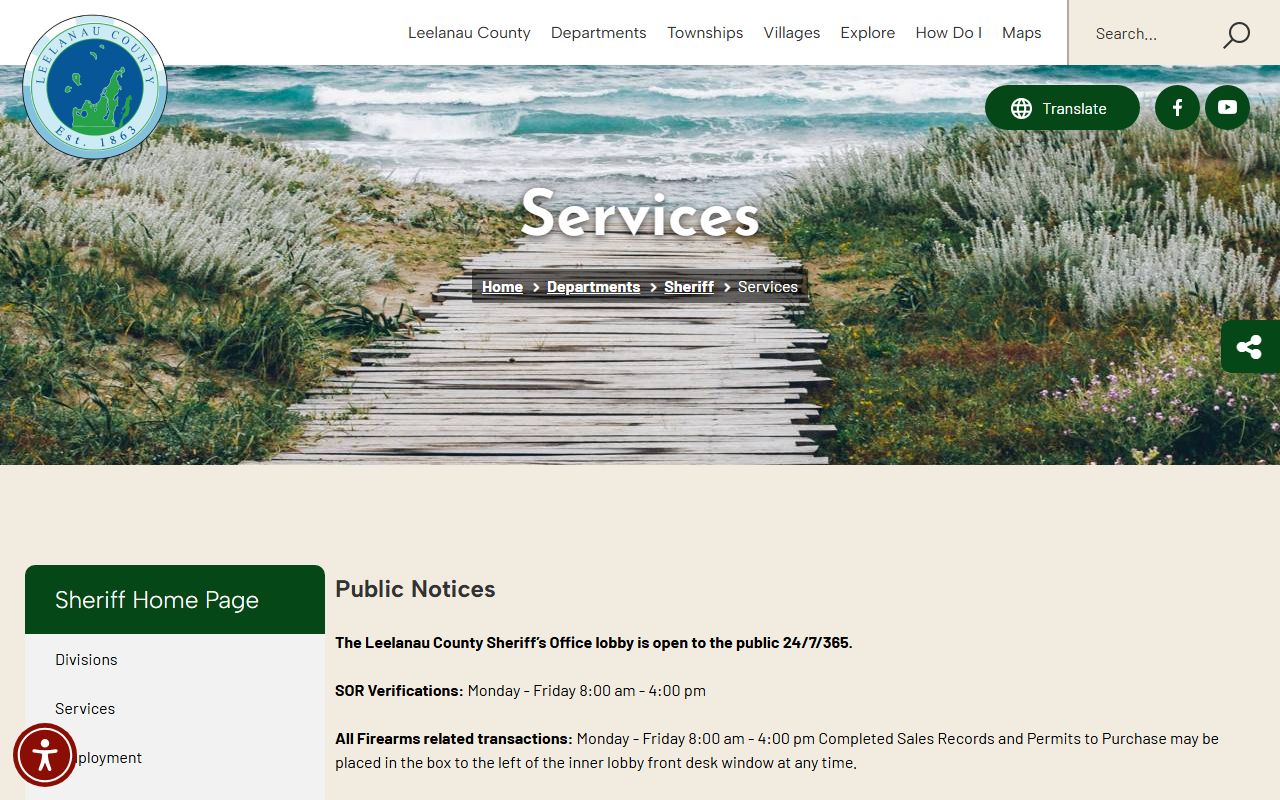
Those service windows matter because the same lobby, open around the clock, is where many warrant and records questions begin in person. The contact block below gathers the lines most often needed for a warrant question.
Leelanau County Sheriff's Office
8525 E. Government Center Dr.
Suttons Bay, MI 49682
Dispatch, non-emergency: 231-256-8800
Jail Control: 231-256-8661
Confidential tip line: 231-256-8696
Lobby open 24 hours a day, 365 days a year
Note: The Sheriff's Office lobby stays open every day of the year, but services such as fingerprinting and sex-offender verification run only on set weekday hours.
Warrant Requests and Charging Decisions
A warrant does not appear out of nowhere. Police investigate first, then send the report to the Leelanau County Prosecuting Attorney. The prosecutor's charging guidance explains that the office reviews the warrant request and may send it back for more investigation or decide which charges, if any, to authorize and when. That charging decision is what turns an investigation into an arrest warrant. The charges that follow are tracked in the Leelanau County criminal court records.
Court papers reach people through service, and the Sheriff's Office handles much of that work in the county. The civil-process page explains that, as of December 9, 2024, the office designated Morgan Civil Process to conduct foreclosure sales and serve papers as Leelanau County special deputies.

Service of process differs from an arrest warrant, yet both show how court authority reaches a named person in Leelanau County.
Restricted and Sealed Warrant Records
Not every warrant is open to the public. Search warrants are frequently sealed until they are executed and returned, which keeps an active investigation from being exposed. Juvenile matters carry even tighter protection under Michigan law.
Michigan's juvenile-record statute, MCL 712A.28, sets when a juvenile court record may be inspected and when it stays confidential.
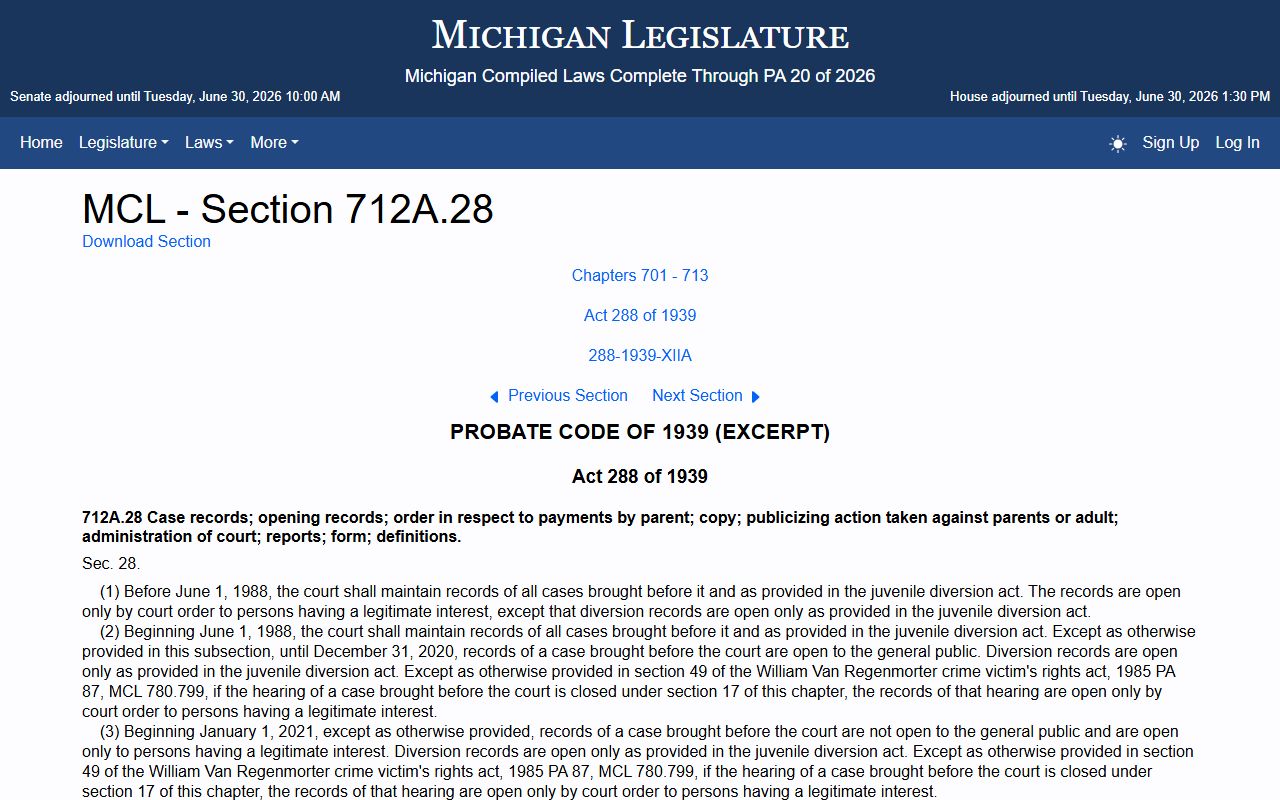
Because of that confidentiality, warrants and case details involving minors are generally kept out of public view in Leelanau County. Federal warrants fall outside the county system altogether and route through federal courts. For county or sheriff records that are not posted and not otherwise sealed, the FOIA process remains the fallback, though law-enforcement exemptions can limit what is released during an open investigation. A person booked into the county jail on a warrant can be tracked through the channels described in the Leelanau County inmate records.
Note: A sealed or juvenile warrant will not surface in any public search, so verification through the issuing court remains the only reliable route.