
What Leelanau County Probate Court Handles
Probate is the court process that closes out a person's legal affairs and looks after those who cannot look after themselves. In Leelanau County, one court handles all of it. The Probate Court opens and supervises decedent estates, admits wills, and appoints the people who carry those wills out. It also names guardians for minors and adults who need help, sets up conservatorships over money and property, and hears mental-health treatment petitions.
These case types run on different rules, yet they share one courthouse counter. Knowing the category first tells you which forms to file and what the record will hold.
- Decedent estates - opening and settling the affairs of someone who has died.
- Wills - admitting a will and safekeeping originals during a person's life.
- Trusts - court oversight of trust matters and trustee duties.
- Guardianships - care decisions for a minor or an incapacitated adult.
- Conservatorships - control of money and property for a protected person.
- Mental-health proceedings - treatment petitions handled under state law.
The county's decedent-estates page explains how an estate opens and what a small estate needs. You can read the Leelanau County decedent estates page for the current thresholds and will rules.
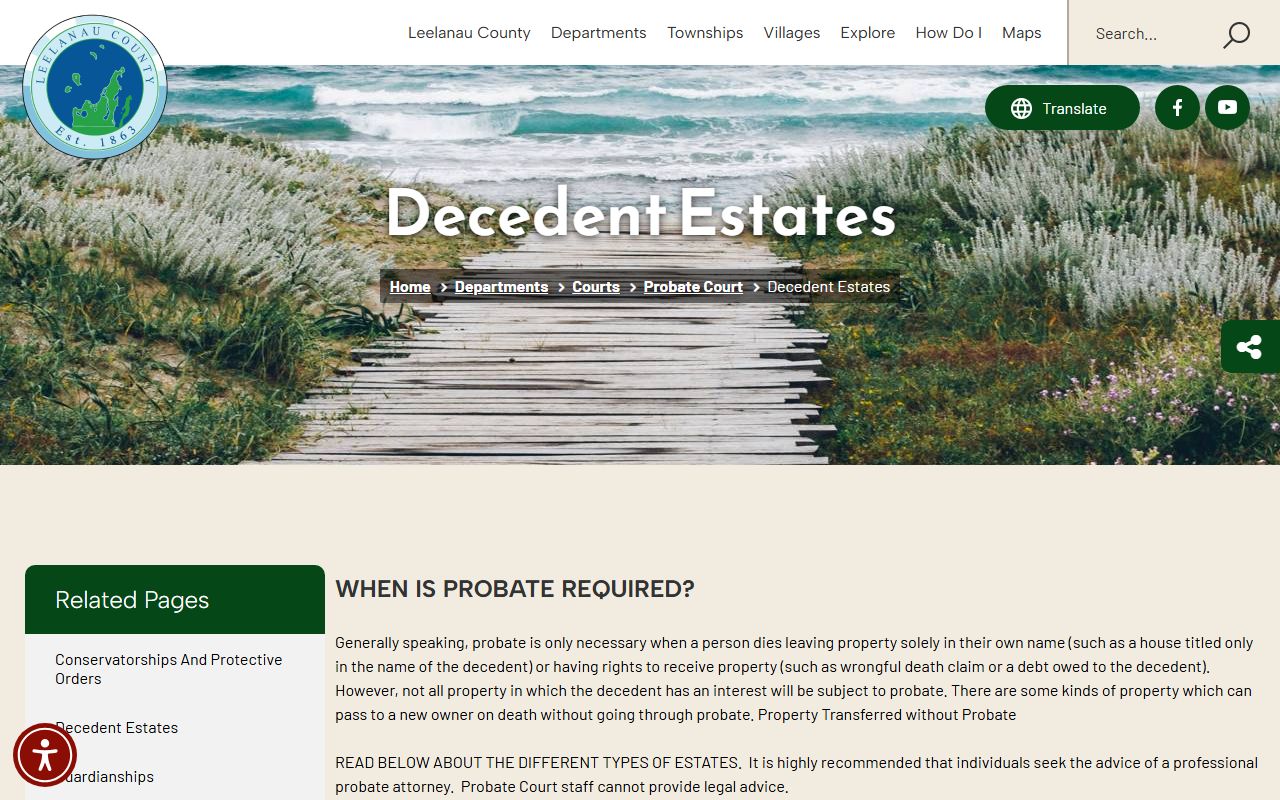
That page anchors most of the county's estate work, since a death is what starts a decedent case. The other case types follow their own petitions but reach the same register.
Common Leelanau County Probate Terms
Probate paperwork leans on a small set of words that carry real weight. A quick read of these terms makes the forms and the file easier to follow.
- Testator
- The person who makes a will and sets out how their property should pass.
- Executor
- The person named in a will to carry it out; Michigan often calls this role a personal representative.
- Intestate
- Dying without a valid will, so state law decides who inherits.
- Guardianship
- A court order giving one person authority over the care of a minor or an incapacitated adult.
- Conservatorship
- A court order giving one person control of another's money and property.
Filing Channels for Leelanau County Probate Records
The way filings reach the court changed, and it matters. The Probate Court no longer accepts filings by email. Everything comes in through a small set of channels, and each has its own limits. Staff work in a compact office and may be in a hearing, so a call ahead saves a wasted trip.
- Mail or FedEx - send filings to the Probate Court at Suite 203 of the Government Center.
- Hand delivery - accepted at the same office; call first to make sure staff can receive it.
- Emergency fax - limited to 15 pages, and the filer should call or email so the fax is not missed.
Timing follows a court rule. Under MCR 2.406(E), papers received during regular business hours count as filed that business day, while after-hours papers count as filed the next business day. Fees that a filing requires must come with it, and the court takes cash, money order, check, cashier's check, or a credit or debit card.
Note: Because the office is small and staff may be in a hearing, call the Probate Court before you hand-deliver papers or expect a fax to be read right away.
Small Estates in Leelanau County
Not every estate needs a full case. Michigan sets a threshold that lets modest estates move through a shorter path. For 2025, the county's decedent-estates page states an estate can qualify as a small estate when the total value of all real and personal property is equal to or less than funeral expenses plus $24,000, which puts the working ceiling under $50,000 as of the date of death.
The mechanics are simple. On presentation of a petition, the filing fee, and the inventory fee, the court orders funeral expenses paid or reimbursed and assigns the balance to the surviving spouse or the heirs under intestate succession. No court hearing is held. One caveat matters: this process does not carry out the terms of a will, and if a will exists, state law still requires the original to be filed with the Probate Court.
The small-estate assignment authority sits in state statute. You can review MCL 700.3982, the small-estate assignment section that the court applies.
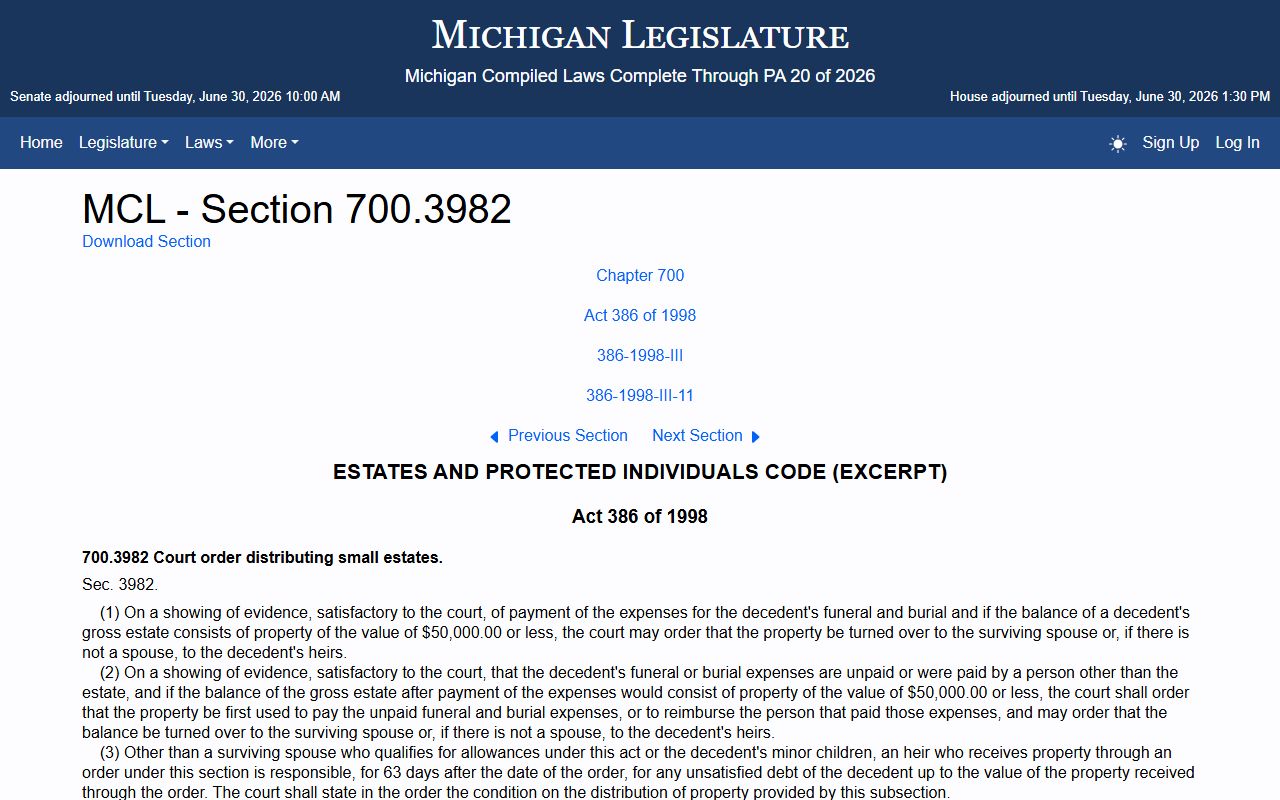
The statute is what lets the register close a small estate without a hearing. It also explains why a will, even in a small estate, still has to reach the court.
Depositing a Will in Leelanau County Probate Court
A person can leave an original will with the court for safekeeping while they are still alive. Leelanau residents may deposit an original Last Will and Testament, a codicil, or both. The testator can do it, or someone acting under their direction can. The steps below track how the court takes the will and how it comes back out.
- Place the will or codicil in a sealed envelope marked with the person's name, physical address, Social Security number or Michigan driver license number, and the date delivered.
- Bring or send it to the Probate Court, where the clerk stamps the envelope "filed" and issues a receipt.
- Pay the deposit fee of $25 for the will or codicil.
- During the testator's lifetime, they may retrieve the will at no charge with their name and personal ID; each redeposit costs $25.
- Another person may retrieve it only with an Authorization to Release Will Held for Safekeeping, form PC 548, plus personal ID.
- For a mailed return, submit PC 548 with a $10 check or money order to the Probate Court; the will is mailed certified, return receipt requested, to the addressee only.
The county's wills page lays out the envelope, ID, and retrieval rules in full. You can open the Leelanau County Probate Court wills page for the safekeeping and pickup details.
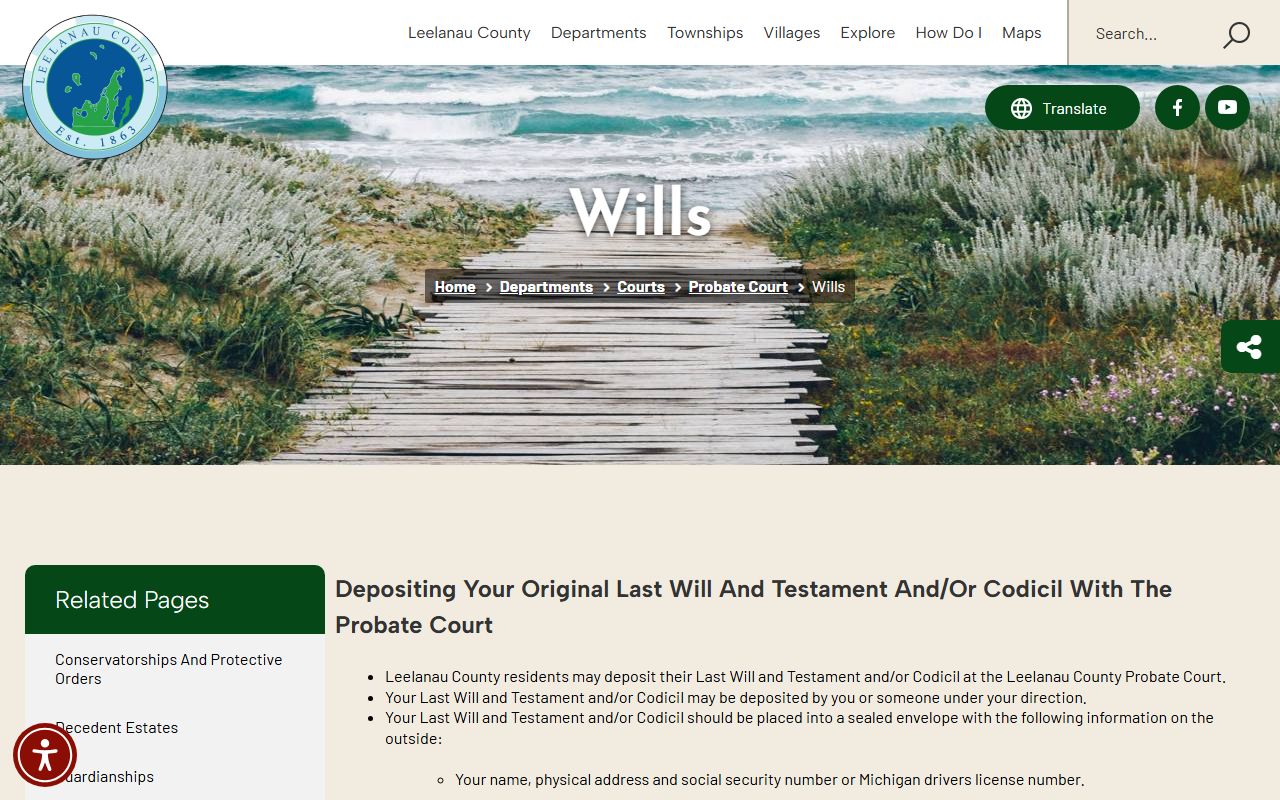
Safekeeping keeps the one original in a known place, which spares heirs a search later. The same page notes that the deposit and each redeposit carry the fee.
Delivering a Will to Leelanau County Probate Court
When the person who made a will dies, the will has to move. Whoever holds the original must promptly deliver it to the Probate Court in the county where the person lived. Failure to do so can bring damages or a contempt penalty, so a custodian should not sit on the paper.
This duty comes straight from state law. You can read MCL 700.2516, the section that requires a custodian to deliver a will after death.
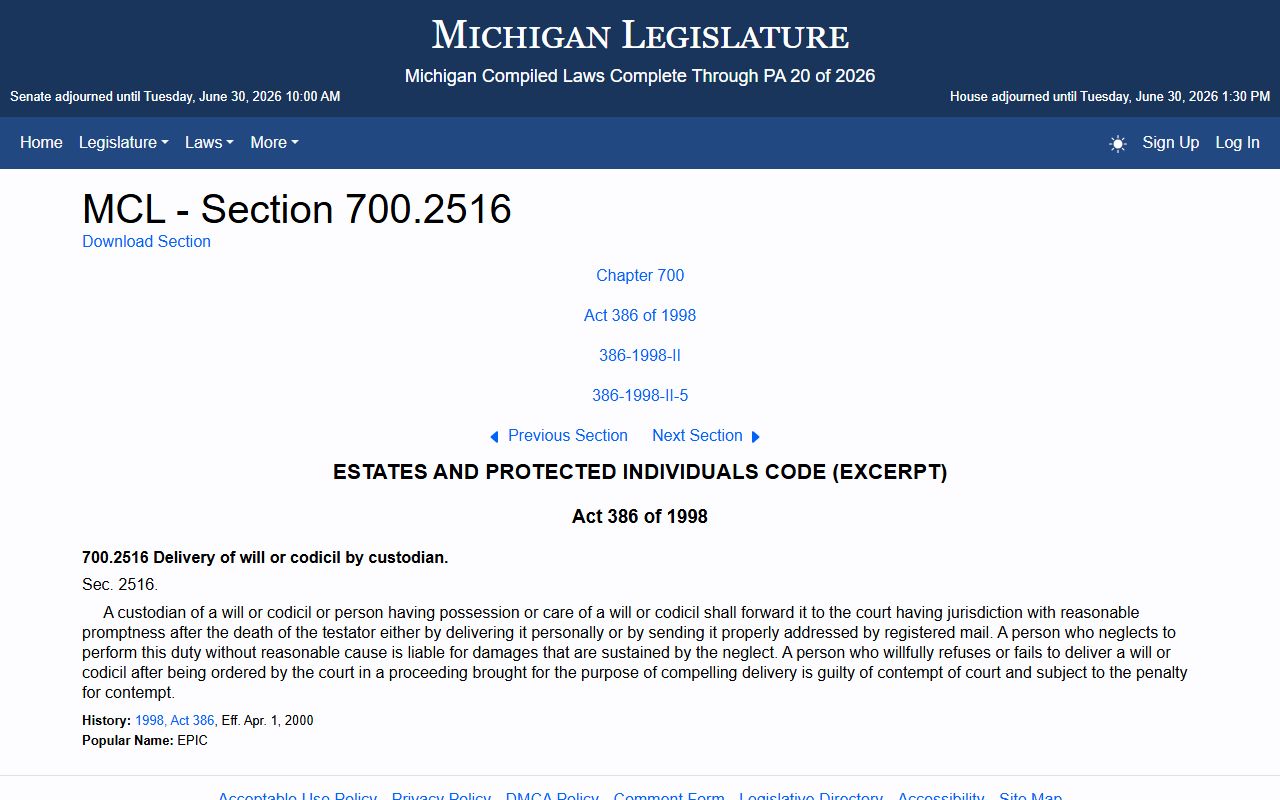
The rule holds even when a small estate is planned, because the will still has to be on file with the court. Delivering it early also lets the family confirm the court has the right document.
Leelanau County Probate Court Contact and Fees
The Probate Court sits in Suite 203 of the Government Center in Suttons Bay. Judge Steven Paciorka took office in January 2025 and also presides over the local Circuit Court Family Division. Kristina Mattis has served as Probate Register since 2019, and Sage Mrdeza is the Deputy Probate Register. The office keeps short public hours, so plan a visit or a call around them.
Leelanau County Probate Court
Probate Register: Kristina Mattis
8527 E. Government Center Dr., Suite 203
Suttons Bay, MI 49682
231-256-8236
Fax: 231-256-9845
kmattis@leelanau.gov / smrdeza@leelanau.gov
Monday to Friday, 9:00 a.m. to 4:30 p.m.
Not every probate fee is a fixed number. Filing and inventory fees ride on the type and size of a case, so the court quotes those when a petition comes in. The safekeeping and retrieval fees below are the ones the county publishes.
| Item | Amount |
|---|---|
| Deposit an original will or codicil | $25 |
| Redeposit a will after lifetime retrieval | $25 each time |
| Mail retrieval of a deposited will (with PC 548) | $10 |
| In-person retrieval by the testator during life | No charge |
How to Access Leelanau County Probate Records
There is no separate Leelanau probate record portal. Access runs through a short list of channels instead, and the right one depends on whether a case is already open and whether you want to view a file or hold a copy.
- Call the Probate Court to ask whether a case exists and how to view or copy it.
- Try MiCOURT Case Search, which may show a probate case when the court participates for that case type.
- Request copies directly from the Probate Court when a file is older, not online, or needs certification.
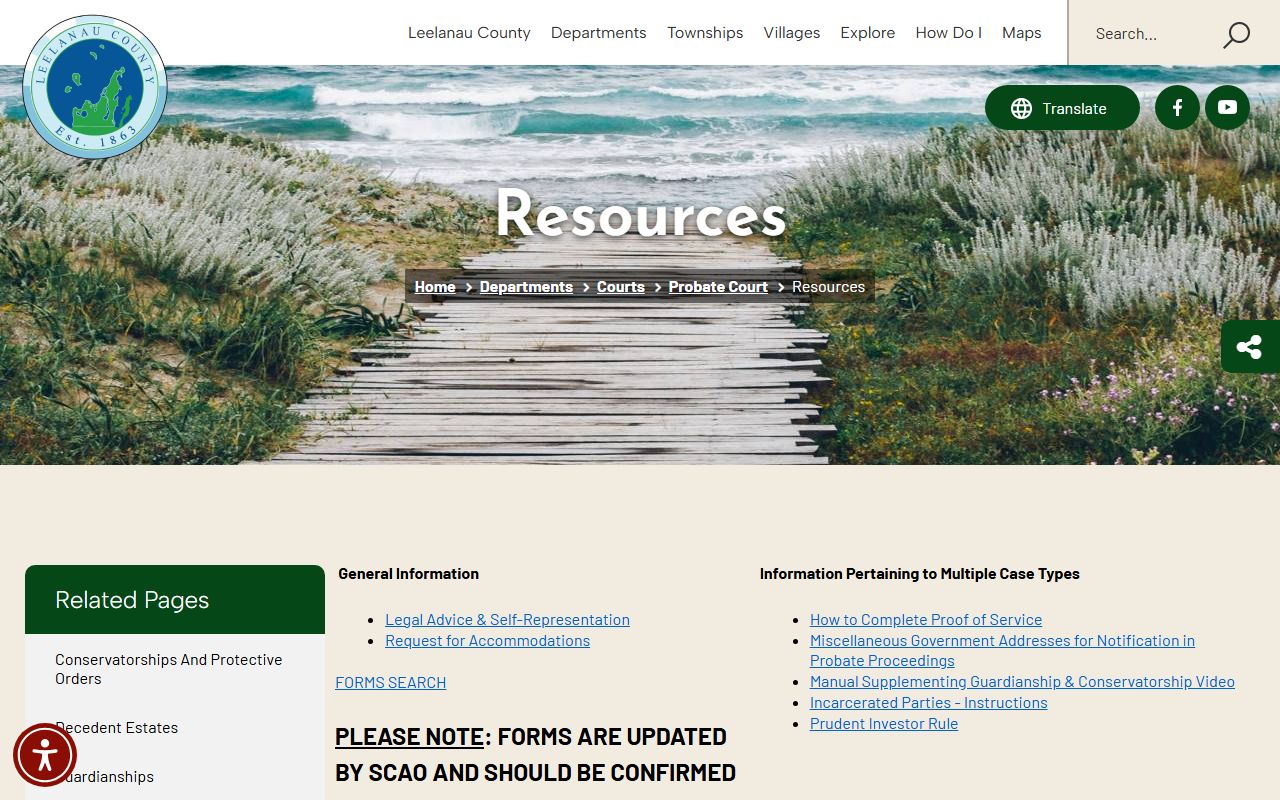
The court's resources page collects the packets and form guidance families reach for most. You can browse the Leelanau County Probate Court resources page for those documents, and the statewide MiCOURT Case Search portal for cases that appear online.
Staff can hand out packets and forms, but they cannot give legal advice. For a certified death record tied to an estate, the request goes to the county clerk instead, a channel covered on the Leelanau County clerk of court page.
Note: Probate staff can provide packets and forms but cannot offer legal advice, so consider counsel for questions about how a filing affects your rights.
Virtual Hearings and ADA Access
The court runs some business by phone and video, and it sets clear rules for watching a hearing or asking for an accommodation. Anyone who needs an ADA accommodation for a probate hearing should contact Kristina Mattis, the Probate Register, ahead of the date.
Watching an open hearing in person takes a little notice. The court asks anyone who wants to view an open hearing to contact the office at least three business days before the scheduled date. That lead time lets staff plan seating and confirm the hearing is open.
Restricted Leelanau County Probate Records
Some probate files are not open to the general public. Mental-health treatment proceedings are restricted by court rule and statute, and access is tightly held. Parts of guardianship and conservatorship files can also be limited, since they hold medical, financial, and personal details about protected people.
Protected personal identifying information stays out of the public view across probate files. Dates of birth, Social Security numbers, and account numbers are shielded under Michigan court rules. When a record is restricted, the court may release it only to a party, an authorized person, or someone with a court order, and marriage or divorce files that touch a family estate follow their own access rules on the marriage and divorce records page.